


Wawel Royal Castle in Kraków: Poland’s Historic Crown Jewel

Wawel isn’t the kind of place you “fit in” between coffee and lunch. It’s a whole hill of Polish history, with royal chambers, cathedral towers, medieval walls, Renaissance arcades, river views, and enough legends to keep the walk uphill interesting.
Set above the Vistula River in Kraków, Wawel Royal Castle and Wawel Hill form one of Poland’s most important cultural sites. For centuries, this was where Polish kings lived, ruled, were crowned, and were buried. Today, it’s one of the country’s top museums and one of the most visited art museums in the world.
That sounds grand, and it is. But Wawel is also surprisingly easy to enjoy without being a history expert. You can wander the courtyards, look over the river, step inside royal rooms, visit Wawel Cathedral, and feel how many layers of Poland are stacked into one limestone hill.
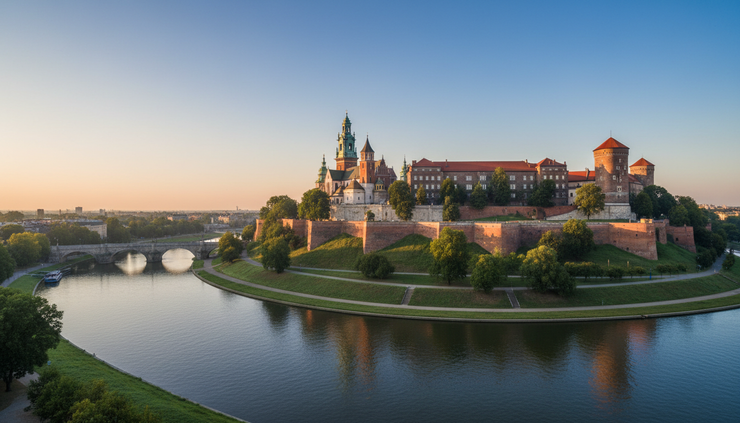
Wawel Hill is where Kraków’s story gets serious
Wawel Hill sits on the left bank of the Vistula River, rising about 228 metres, or 748 feet, above sea level. That high limestone outcrop made it a natural defensive spot long before tourists started climbing its paths with cameras and water bottles.
Some of the oldest stone structures on the hill date back to around 970 CE. That means Wawel reaches into the early medieval story of Poland, before the castle became the grand royal residence people know today. Over time, the hill grew into a fortified architectural complex with churches, walls, gates, residences, courtyards, and museum spaces.
The current castle took shape in the 14th century under King Casimir III the Great, one of Poland’s most important medieval monarchs. Later kings kept adding to it, changing it, and rebuilding parts of it to match the tastes and politics of their own times.
That’s why Wawel doesn’t look like one neat building from one period. It’s more like a living scrapbook in stone.
You’ll see traces of:
Romanesque architecture in some of the oldest surviving remains
Gothic design in the cathedral and medieval structures
Renaissance elegance in the castle courtyard and royal apartments
Baroque drama in later chapels, interiors, and details
The result feels layered rather than perfectly symmetrical. That’s part of the charm. Wawel has been used, damaged, restored, expanded, occupied, and reimagined for centuries. It still carries the marks of all that history.
In 1978, Wawel became part of the Historic Centre of Kraków, one of the first sites placed on the UNESCO World Heritage List. That recognition fits. Kraków’s old town is beautiful, but Wawel is the emotional and historical anchor.
The castle was built for kings, but it’s made for slow looking
Wawel Castle was a royal residence first. That matters when you walk through it. This wasn’t just a defensive fortress. It was a place designed to show power, taste, wealth, and connection to Europe.
The castle’s famous Renaissance courtyard is one of the best places to pause. The arcaded galleries give it a calm, balanced feel, even when visitors are moving through. If you’ve been walking through Kraków’s busy streets, the courtyard can feel like the city has suddenly lowered its voice.
This part of Wawel reflects Poland’s strong Renaissance links with Italy. Polish rulers invited foreign artists, architects, and craftsmen to Kraków, and their influence changed the castle’s look. The result is one of the finest Renaissance spaces in Central Europe.
Inside, the museum now includes collections across ten curatorial departments. Depending on what’s open and which route you choose, you might see:
Paintings, including Italian Renaissance works
Prints and sculpture
Goldsmiths’ work and ceremonial objects
Arms and armour
Ceramics and Meissen porcelain
Period furniture
Historic textiles, including the famous Sigismund II Augustus wall hangings
Oriental art, including a major collection of Ottoman tents
That last collection often surprises people. Wawel isn’t only about Polish royal portraits and castle furniture. Its holdings show Poland’s connections with wider Europe and the Ottoman world too.
With more than 3.47 million visitors in 2025, Wawel Castle ranked as Poland’s most visited art museum and among the most visited art museums worldwide.
That popularity means the main sights can get busy. Still, Wawel rewards patience. Look up at ceilings. Notice door frames, tiles, fabrics, weapons, and small decorative details. Royal spaces often speak through craft as much as through size.

Wawel Cathedral is the heart of the hill
If the castle tells the story of royal life, Wawel Cathedral tells the story of royal memory.
For centuries, Polish monarchs were crowned here. Many were buried here too, along with national heroes, poets, and important historical figures. That gives the cathedral a different atmosphere from the castle museum. It feels less like a residence and more like a national shrine.
The building itself is a blend of styles, because it changed across the centuries just like the castle. Gothic structure, Renaissance chapels, Baroque decoration, royal tombs, and memorials all sit close together. It can feel crowded visually, but that density is exactly what makes it powerful.
One of the most famous parts of the cathedral complex is the Sigismund Chapel, often praised as a masterpiece of Renaissance architecture north of the Alps. Its golden dome stands out from many views of Wawel Hill, and it carries the kind of royal confidence that tells you Kraków once stood at the centre of a major European kingdom.
The cathedral is also tied to the Sigismund Bell, one of Poland’s best-known bells. It rings on major religious and national occasions, and its sound is closely linked with moments of public memory.
For a visitor, the cathedral is worth taking slowly. It’s easy to rush through because there’s so much to see. Give yourself time for the side chapels and tombs. Wawel is at its best when you let the details catch up with you.
Here’s a simple way to think about the difference:
Castle
Cathedral
Royal residence, art collections, state rooms, courtyard, armour, furniture
Coronations, burials, chapels, tombs, religious art, national memory
Both matter. If there’s time for only one paid interior visit, the choice depends on what sounds more interesting. For royal rooms and museum collections, choose the castle. For coronations, tombs, and sacred history, choose the cathedral.
The museum is much more than a castle tour
Wawel Castle officially became a museum in 1930, and it’s now one of Poland’s premier art institutions. That museum role is easy to miss if the castle’s towers and walls steal all the attention.
The collections are broad, and the museum also has seven specialised conservation studios. That work matters because many objects at Wawel are fragile, rare, and deeply tied to Polish heritage. Conservation keeps them from becoming only stories in books.
The royal apartments show how rulers used space to impress guests and conduct court life. The armour and weapons collections bring in the military side of monarchy. Ceramics, furniture, and decorative arts fill in the daily world of the court, where status showed up in every object.
The Italian Renaissance paintings connect Wawel to the artistic currents that shaped elite Europe. The Ottoman tents and oriental art collection point to contact, conflict, diplomacy, and fascination across borders.
This is what makes Wawel more than a pretty castle. It’s a museum of how Poland saw itself and how it interacted with the world.

How to plan a visit without rushing it
Wawel sits close to Kraków’s Old Town, so it’s easy to reach on foot from the Main Market Square area. The walk is part of the experience, especially if you approach from Kanonicza Street, one of the city’s most atmospheric old streets.
Try not to treat Wawel as one single attraction with one single entrance and one fixed route. It’s better to think of the hill as a cluster of sights. Some outdoor areas can be enjoyed casually, while museum exhibitions and cathedral areas may need separate tickets or timed entry.
A good first-time plan looks like this:
Walk up to Wawel Hill and take in the views over the Vistula.
Spend a few minutes in the castle courtyard.
Visit either the castle interiors or Wawel Cathedral.
Add a second exhibition if time and energy allow.
Save a little time to walk around the outer walls and river side.
If visiting in high season, book key exhibitions ahead when possible. Wawel attracts huge numbers of visitors, and popular routes can sell out or feel crowded later in the day.
Morning is usually the nicest time for photos and calmer walking. Late afternoon can be beautiful too, especially near the river, when the light softens around the castle walls.
Wear comfortable shoes. The hill isn’t extreme, but there are slopes, cobbles, stairs, and museum floors that add up fast. Also, check current opening times before going, since hours can vary by season, exhibition, and day of the week.
Don’t skip the legends and river views
Wawel isn’t only royal history. It’s also one of Kraków’s great storytelling places.
The most famous local legend is the Wawel Dragon, said to have lived in a cave at the foot of the hill. The dragon story is playful, dark, and very Kraków. Near the river, a dragon statue even breathes fire, which makes it a favourite stop for families and anyone who enjoys a bit of folklore with their sightseeing.
This mix of legend and state history gives Wawel its personality. One minute you’re thinking about medieval kings. The next, you’re watching people wait for a metal dragon to flame near the Vistula.
That contrast works. It keeps the hill from feeling too solemn.
The river views are also worth a pause. From the paths and terraces around Wawel, Kraków opens out in a different way. You can see how the castle controlled the bend of the river and why this spot mattered so much. It wasn’t chosen by accident.

FAQ
Is Wawel Royal Castle worth visiting?
Yes. It’s one of the most important historic sites in Poland, and it combines royal history, art collections, architecture, cathedral spaces, river views, and local legends in one place.
How much time should I spend at Wawel?
Plan at least two to three hours if you want to see the hill, courtyard, and one major interior route. Add more time if you want both the castle exhibitions and the cathedral.
Can I visit Wawel without going inside the museum?
Yes. You can walk around parts of Wawel Hill, enjoy the exterior views, and visit the courtyard area depending on current access rules. The paid interiors are still worth it if time allows.
What is the best part of Wawel for first-time visitors?
The Renaissance courtyard, Wawel Cathedral, and the view over the Vistula are the best starting points. Together, they give a strong feel for the hill’s beauty and importance.
Is Wawel Castle good for families?
Yes, especially if you mix history with the Wawel Dragon legend and the riverside area. Some museum rooms may be slower-paced for young children, so choose routes carefully.

Wawel is the one Kraków sight to slow down for
Kraków has plenty of places that are easy to love, but Wawel carries a different weight. It’s a royal residence, a cathedral hill, a museum, a fortress, a UNESCO-listed landmark, and a symbol of Polish statehood all at once.
The best way to visit is simple. Don’t rush the hill just to tick it off a list. Walk up slowly, look across the river, stand in the courtyard, choose the interiors that interest you most, and leave time for the cathedral or the dragon below.
Wawel rewards curiosity. Give it a little time, and it’ll feel less like a monument and more like the place where Poland’s past is still very much alive.


Comments